

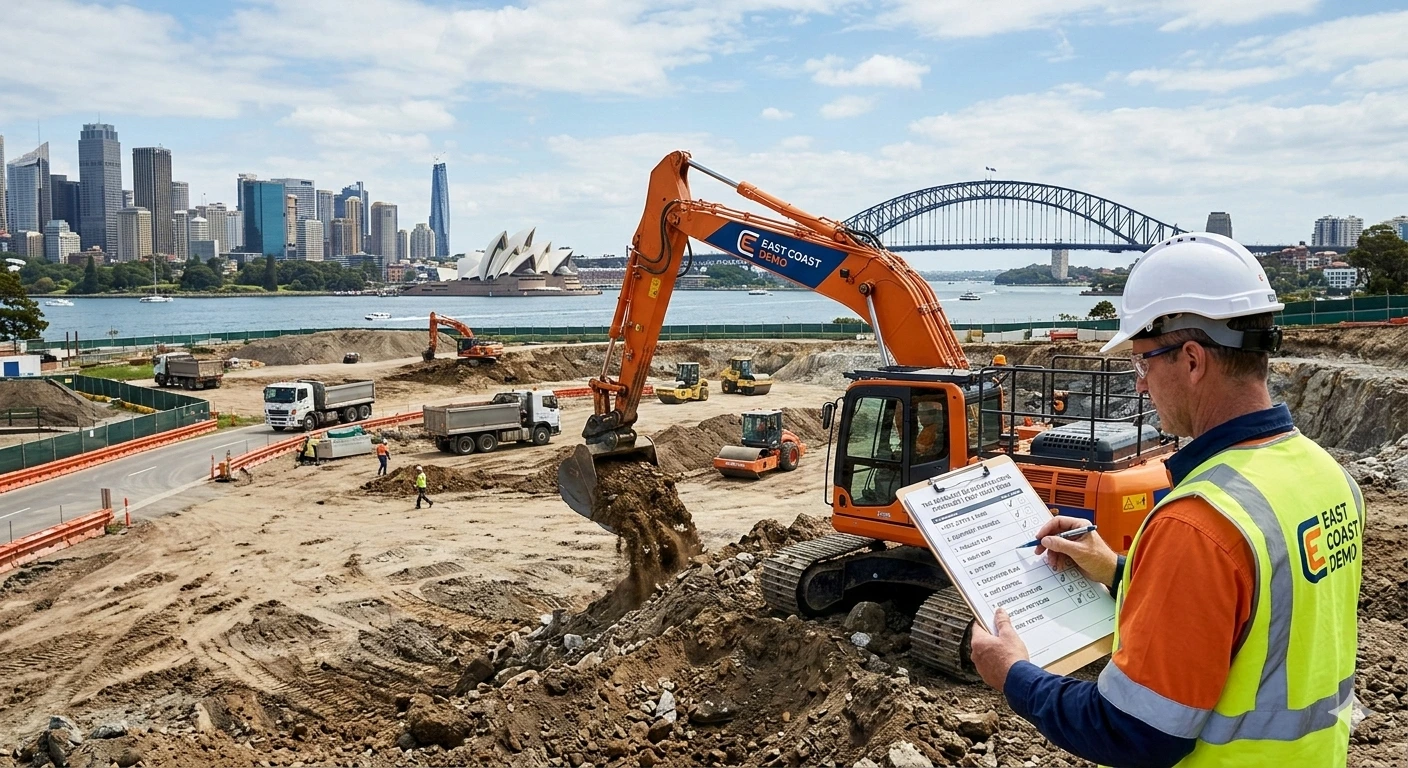
Bulk earthworks are the foundational phase of almost any significant construction project, requiring meticulous planning, heavy machinery, and precise execution. Whether you are preparing a site for a high-rise development in the CBD or levelling land for a new residential subdivision in Western Sydney, the complexity of moving vast quantities of soil and rock cannot be overstated. Engaging a highly skilled and experienced excavating contractor in Sydney is the first and most critical step in ensuring this phase proceeds without costly delays or environmental mishaps. This guide provides a comprehensive, expert checklist designed to streamline your bulk earthworks project, highlighting the essential steps and pitfalls to avoid from a contractor’s perspective.
Understanding the sequence and requirements of bulk earthworks is essential for developers, project managers, and builders alike. Before diving into the technical details, it’s worth noting that earthworks often follow necessary site clearance or structure removal. For insights into the preceding phase, you can learn about the methodologies employed by Top Demolition Companies to ensure a clean site transfer. Once the site is clear, the focus shifts entirely to cut-and-fill operations, where the specialized knowledge of a local excavating contractor in Sydney becomes indispensable for navigating regional regulations, varying soil types, and logistical challenges.
Detailed Project Planning and Site Assessment
A flawless bulk earthworks project is won or lost in the planning phase, long before the first excavator bites into the ground. A professional site excavation contractor will prioritize data collection to mitigate risks that often hide beneath the surface.
Thorough Site Investigations
The first step for any reputable excavating contractor in Sydney is to understand exactly what lies beneath the surface. Sydney’s geology is notoriously diverse, ranging from Hawkesbury sandstone to reactive clays.
Geotechnical Reporting
A comprehensive geotechnical report is non-negotiable. This report, typically commissioned by the developer but essential for the contractor, details the soil composition, bearing capacity, and the presence of rock. It informs the excavating contractor in Sydney about the types of machinery required—for instance, whether standard excavators will suffice or if specialized rock hammering and sawing equipment is necessary.
Environmental and Contamination Testing
Given Sydney’s industrial history in many areas, testing for soil contamination (e.g., asbestos, heavy metals, hydrocarbons) is vital. An experienced contractor knows that discovering contamination mid-project can halt work for weeks. Pre-emptive testing allows for the development of a Remediation Action Plan (RAP), ensuring contaminated material is handled legally and safely.
Utility and Services Mapping
Striking an underground utility is a major safety risk and a guaranteed project delay. Expert excavation services involve more than just digging; they involve protection of existing assets.
Dial Before You Dig (DBYD)
While DBYD plans are the starting point, they are not infallible. An expert excavating contractor in Sydney will use these plans as a guide and supplement them with professional electronic service locating and, where necessary, non-destructive potholing (hydro-excavation).
Protection of Critical Infrastructure
This precisely maps the location and depth of assets like fibre optic cables, high-voltage lines, gas mains, and water pipes. It creates a ‘no-go’ or ‘hand-dig only’ zone around critical infrastructure to prevent catastrophic damage and service outages for the surrounding Sydney community.
Regulatory Compliance and Approvals
Navigating the bureaucratic landscape is a significant component of any Sydney project. Without the right permits, even the best-laid plans can face legal hurdles.
Securing Necessary Permits
A major project cannot start without the correct paperwork in place. This ensures that the residential excavation services provided align with local council requirements.
Development Consent and Construction Certificates
The foundation of compliance is ensuring that the specific scope of the bulk earthworks is covered by the Development Consent (DA) issued by the local council. Furthermore, a Construction Certificate (CC) must be active before the excavating contractor in Sydney can mobilize.
Specific Licenses and Insurance
Ensure your chosen excavating contractor in Sydney holds all required operational licenses, including SafeWork NSW licenses for specific plant operations. Furthermore, verify they hold comprehensive Public Liability and Workers’ Compensation insurance policies to protect all stakeholders involved.
Adhering to Codes of Practice
Sydney has strict standards regarding environmental management and worker safety that must be upheld at all times.
Erosion and Sediment Control Plans (ESCP)
Controlling runoff is a major environmental priority. The contractor must implement a robust ESCP. This includes installing sediment fences, silt traps, and stabilized site access points to prevent sediment-laden water from entering the Sydney stormwater system or tracking mud onto public roads.
Safe Work Method Statements (SWMS)
Before any high-risk construction work begins, the excavating contractor in Sydney must develop comprehensive SWMS. These documents identify high-risk activities—such as working near live services or deep excavations—and detail the specific control measures implemented to ensure safety.
Mobilization and Site Setup
Setting up the site efficiently paves the way for a smoother workflow and ensures that the excavating contractor in Sydney can operate without logistical bottlenecks.
Establishing Site Layout and Access
How the site is arranged directly impacts efficiency. Poorly planned access can lead to significant delays in material movement.
Heavy Vehicle Access and Traffic Management
Bulk earthworks generate significant traffic. The contractor must establish designated, stable entry and exit points for heavy rigid and articulated trucks. In busy urban environments, a formally approved Traffic Management Plan (TMP) may be required to coordinate truck movements.
Stockpile and Resource Management
Where material is stored matters. The excavating contractor in Sydney needs to designate clean, stable areas for topsoil, clean fill, and any potentially contaminated material, ensuring they are protected from wind and water erosion while remaining accessible.
Specialized Plant and Equipment Selection
Choosing the right tool for the job is essential. Below is a breakdown of the standard equipment used for bulk earthworks in the Sydney region.
| Equipment Type | Primary Function | Key Sydney Consideration |
| Excavator (20t – 50t) | Bulk digging and loading | Must match site access; rock saws required for sandstone areas. |
| Articulated Dump Truck | Onsite material transport | Best for rough terrain and large-scale residential subdivisions. |
| Padfoot Roller | Clay compaction | Essential for Western Sydney sites with high clay content. |
| GPS-Guided Grader | Final trimming | Ensures levels are within +/- 10mm tolerance for the next trade. |
| Smooth Drum Roller | Granular compaction | Used for roadbase and sandy soil preparation. |
Execution, Monitoring, and Material Management
The core ‘cut and fill’ phase requires active management and precision to ensure the longevity of the built environment.
Precision Earthwork Control
Bulk earthworks are about moving material to precise specifications, not just digging deep holes.
GPS and Survey Control
Modern bulk earthworks rely on sophisticated technology. Reputable excavating contractors in Sydney utilize GPS-guided machinery linked to a master survey model. This allows machine operators to see the design levels in real-time, reducing manual setout time.
Bulk Cut-and-Fill Optimization
The primary goal is often to achieve a ‘balanced’ site—where the volume of cut material equals the required fill volume. An expert excavating contractor in Sydney will sequence operations to minimize double-handling of soil.
Strict Quality and Density Testing
‘Fill’ is only ‘structural’ if it is compacted correctly to avoid future ground movement or sinking.
Compaction Testing and Level 1 Supervision
For fill areas destined to support structures, strict adherence to compaction specifications is critical. This requires regular onsite testing by a NATA-accredited laboratory. You can find more information on SafeWork NSW standards for high-risk earthworks.
Geotechnical Certification
In many cases, Level 1 Geotechnical Supervision is mandatory. This provides continuous onsite monitoring and certification by an engineer that all fill placement meets the design standards, which is a standard requirement for high-quality residential excavation services.
Effective Waste and Material Management
Handling material efficiently and legally is a major cost factor in any Sydney construction budget.
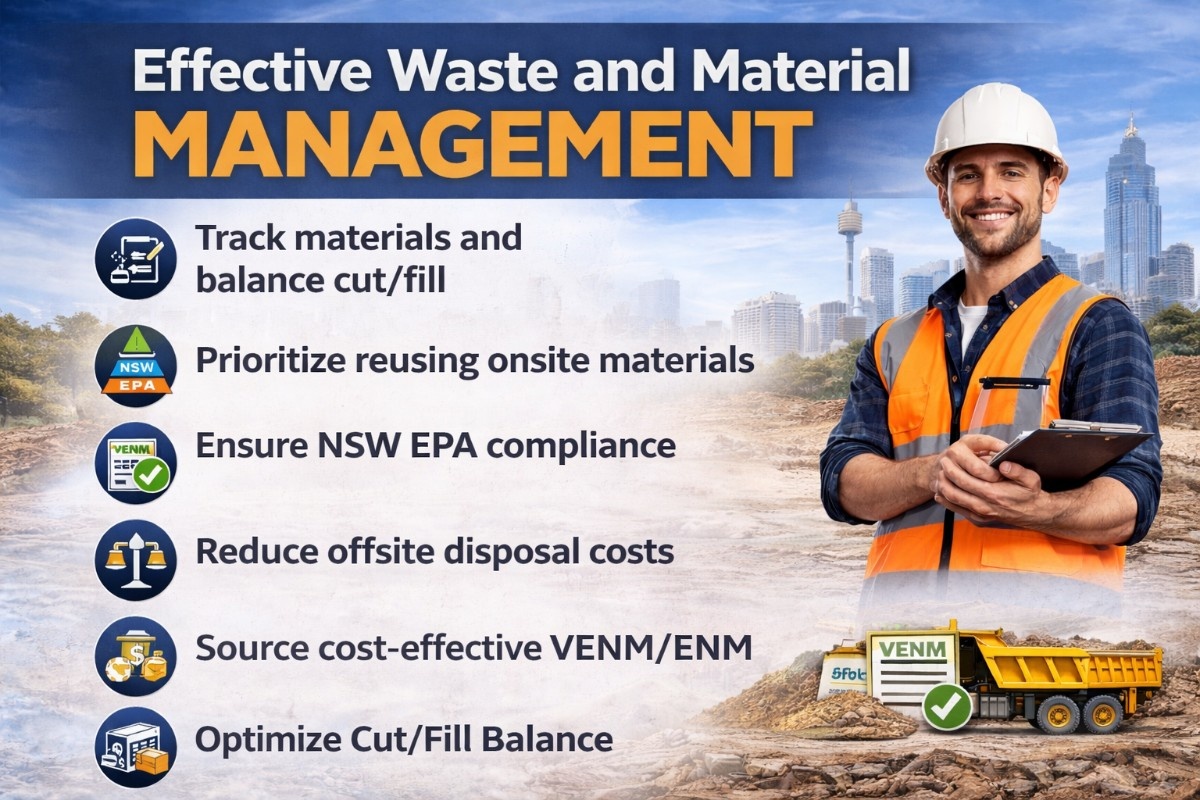
Implementing a Material Management Plan
Tracking every cubic meter of material is essential for both the budget and environmental compliance.
The Waste Hierarchy and Onsite Processing
The best way to manage waste is to prevent it. A proactive excavating contractor in Sydney will prioritize reusing material onsite. Onsite processing, such as crushing sandstone for use as roadbase, can dramatically reduce disposal costs.
EPA Compliance and Waste Classification
If material cannot be reused, it must be legally disposed of. The NSW EPA imposes strict regulations. Every load leaving the site must be tracked and disposed of at a facility licensed to accept that specific classification of waste.
Minimizing Offsite Disposal Costs
Efficient management directly translates to budget savings, as tipping fees in Sydney are among the highest in the country.
Optimizing Cut/Fill Balance
Every cubic meter of material exported from or imported to the site comes with a cost. A detailed analysis by the excavating contractor in Sydney can identify opportunities to adjust site levels slightly to achieve a better balance.
Strategic Importing of Clean Fill
When import is unavoidable, logistics are critical. An established contractor will have a network of suppliers to source Virgin Excavated Natural Material (VENM) or Excavated Natural Material (ENM) cost-effectively for your project.
Site Handover and Reinstatement
The final phase involves preparing the site for the next trade, ensuring a seamless transition to building or landscaping.
Achieving Final Design Surface
The earthworks phase ends with a precise finish that allows the builder to commence foundation work immediately.
GPS-Guided Final Trim
Once bulk levels are achieved, the surface requires final trimming. Using GPS-guided equipment, the excavating contractor in Sydney will achieve tolerances ready for paving or detailed foundation work.
As-Built Surveys and Certification
To confirm the works meet specifications, a final ‘as-built’ survey is conducted. The contractor should also provide a formal close-out package including compaction certificates and EPA waste tracking dockets.
Reinstating Adjoining Areas
Leaving the site and its surroundings in professional condition is the mark of a quality contractor.
Road and Footpath Cleaning
The responsibility of the excavating contractor in Sydney doesn’t end at the boundary line. The contractor is responsible for ensuring that all surrounding roads are thoroughly swept and cleaned of any mud or debris.
Drainage and Erosion Control Finalization
The final surface must have positive drainage to prevent water ponding. Furthermore, the contractor must ensure that final erosion controls are stable, protecting the site until the next stage of construction begins.
Conclusion
Bulk earthworks are a high-stakes phase of construction, with no room for error. Following this comprehensive expert checklist—from diligent site investigation and regulatory compliance to precise execution, strict quality control, and responsible material management—is fundamental to delivering a seamless project. However, the true difference between a smooth operation and a costly nightmare is the expertise of the people on the ground. Partnering with a proven, local excavating contractor in Sydney ensures that every item on this checklist is managed by experts who understand the city’s complex geology and strict regulatory environment.
Don’t leave your project’s foundation to chance. When you choose East Coast Demolition, you’re not just hiring equipment; you’re engaging with a team that has a comprehensive understanding of the entire site preparation process. We are committed to safety, efficiency, and full compliance, ensuring your bulk earthworks are completed perfectly, ready for the next phase. Contact us today or call for a consultation to get a quote today for your next Sydney excavation project.
Frequently Asked Questions
What is the main role of an excavating contractor in bulk earthworks?
The primary role of an excavating contractor in Sydney is to precisely sculpt the site to the specified design levels. This involves the managed cutting, moving, and filling of vast quantities of soil and rock according to engineering standards.
How do I know if a site needs bulk earthworks?
Virtually all major construction projects require bulk earthworks to create a flat, stable platform. This is essential where the natural ground level varies significantly or where sites need to be recontoured for proper drainage.
What are the common challenges in Sydney bulk earthworks projects?
Sydney presents unique challenges, including diverse geology like Hawkesbury sandstone, strict EPA regulations regarding waste disposal, and the need to navigate dense networks of underground utilities in urban areas.
Why is compaction testing so important?
Compaction testing ensures that placed soil has achieved the density required to support future structures. Failing this step can lead to significant structural damage to foundations and pavements, requiring expensive rectification work later.
What is Level 1 Geotechnical Supervision?
Level 1 Geotechnical Supervision is the continuous monitoring and testing of fill placement by a qualified engineer. This ensures every layer of material meets specification, resulting in a signed engineering certificate for the site.
How are bulk earthworks costs calculated?
Costs are primarily calculated based on the volume of material moved and its classification. Key variables include the distance material must be moved, the amount of rock breaking required, and tipping fees for any soil exported from the site.