

A homeowner in Marrickville recently called me after pulling old bathroom tiles off a wall in a 1960s fibro home. Underneath, they found a grey cement sheet that looked nothing like modern plasterboard.
They’d already filled the room with dust before stopping to ask whether it was safe. That’s exactly how many asbestos testing Sydney jobs begin.
Once older building materials are disturbed, you can’t simply guess what’s inside them. Before anyone reaches for a crowbar or demolition saw, I always recommend reading about asbestos removal Sydney so you understand what happens if asbestos is identified.
After inspecting hundreds of Sydney properties over the years, I’ve learnt one thing: spending a little time testing first almost always saves months of expensive problems later. Asbestos testing Sydney is the first step that gives homeowners and demolition contractors confidence that work can begin safely and in line with NSW regulations.
Before Demolition Starts
Most people are surprised when I explain that asbestos testing Sydney isn’t simply a good idea before demolition work — it’s a legal requirement whenever an older property is involved. Under the NSW Work Health and Safety Regulation, asbestos containing materials must be identified before demolition or major renovation begins. Nobody can manage a hazard they haven’t confirmed.
I’ve walked through countless fibro cottages in Blacktown where original wall sheeting was still hidden behind renovated kitchens. Those discoveries changed the entire demolition plan. The same situation turns up regularly in Penrith, where post-war housing estates still contain many homes built during the years asbestos cement products were considered standard construction materials.
Back between the 1940s and 1987, asbestos found its way into thousands of Sydney homes because it resisted heat, added strength and remained affordable for builders. Fibrous cement sheeting containing chrysotile white asbestos became especially common in fibro cottages across Campbelltown, where many original homes from the 1950s and 1960s remain standing today.
People often assume renovations carried out over the decades removed every hazardous material. That’s rarely what I find once walls and ceilings begin opening up — hidden layers tell a different story.
Property owners and demolition contractors both carry responsibilities before structural work begins. I’ve attended sites where clients believed previous renovation paperwork proved asbestos had already been removed, only for fresh inspections to uncover untouched eave linings and old service penetrations that still contained asbestos products.
That’s why every responsible project begins with asbestos testing Sydney, followed by a clear assessment of what stays, what must be removed and what safety controls need to be in place before machinery arrives. Anyone planning demolition should also understand the process behind licensed asbestos removal Sydney, because testing and removal always work together rather than as separate jobs.
Skipping those first steps creates problems that spread quickly across a site. I’ve watched straightforward residential demolition projects pause for weeks because someone assumed a wall was ordinary fibro without confirming what it contained. A proper assessment costs far less than stopping work halfway through, organising emergency testing and explaining the delay to neighbours, trades and insurers.
Where Asbestos Still Hides
Even if a material appears harmless, asbestos testing Sydney is the only reliable way to confirm whether asbestos fibres are actually present. People often expect asbestos to be obvious, yet many of the materials I sample across Sydney look completely ordinary until laboratory results come back.
I’ve removed skirting boards in Leichhardt and found asbestos cement wall linings sitting quietly behind modern plaster repairs that nobody suspected were there. The same thing happens in brick veneer homes around Parramatta, where several renovations covered older materials instead of replacing them.
The materials I find most often include:
- Fibro wall sheeting — especially in older laundries, bathrooms and garages
- Eave linings, soffits and corrugated roof sheets — weather exposure doesn’t mean asbestos has disappeared
- Vinyl floor tiles — common in 1970s homes, with asbestos in both the tile and adhesive backing
- Textured ceiling coatings — sometimes hidden beneath several coats of paint
- Pipe lagging around older hot water services — its condition can deteriorate over time
One of the biggest misunderstandings I hear is that every asbestos product carries the same level of risk. That’s simply not true, and understanding the difference helps explain why removal methods vary depending on the material involved.
| Feature | Friable Asbestos | Non-Friable Asbestos |
|---|---|---|
| Risk level | Very high — fibres release easily when disturbed | Lower while material remains intact and undamaged |
| Common Sydney locations | Pipe lagging, sprayed insulation, some textured coatings | Fibro wall sheets, roof sheets, eaves, vinyl floor tiles |
| Removal requirements | Strict containment, air monitoring and specialised controls | Controlled removal procedures to prevent damage during handling |
| Licensed removal | Class A licensed asbestos removal contractor | Class B licensed contractor for bonded asbestos products |
Homeowners often focus on the biggest visible materials while missing smaller hidden components — cement backing behind electrical meter boxes, old fencing panels, external laundry walls and roof penetrations. Around Balmain and Newtown, older terraces often combine original building materials with decades of renovations, making it difficult to predict exactly what sits behind each surface.
Even experienced tradespeople won’t identify every asbestos product by appearance alone, because manufacturers produced many materials that looked almost identical to non-asbestos alternatives. I still collect samples from suspect areas rather than relying on memory, because laboratory confirmation removes uncertainty before demolition begins.
What Professional Testing Involves
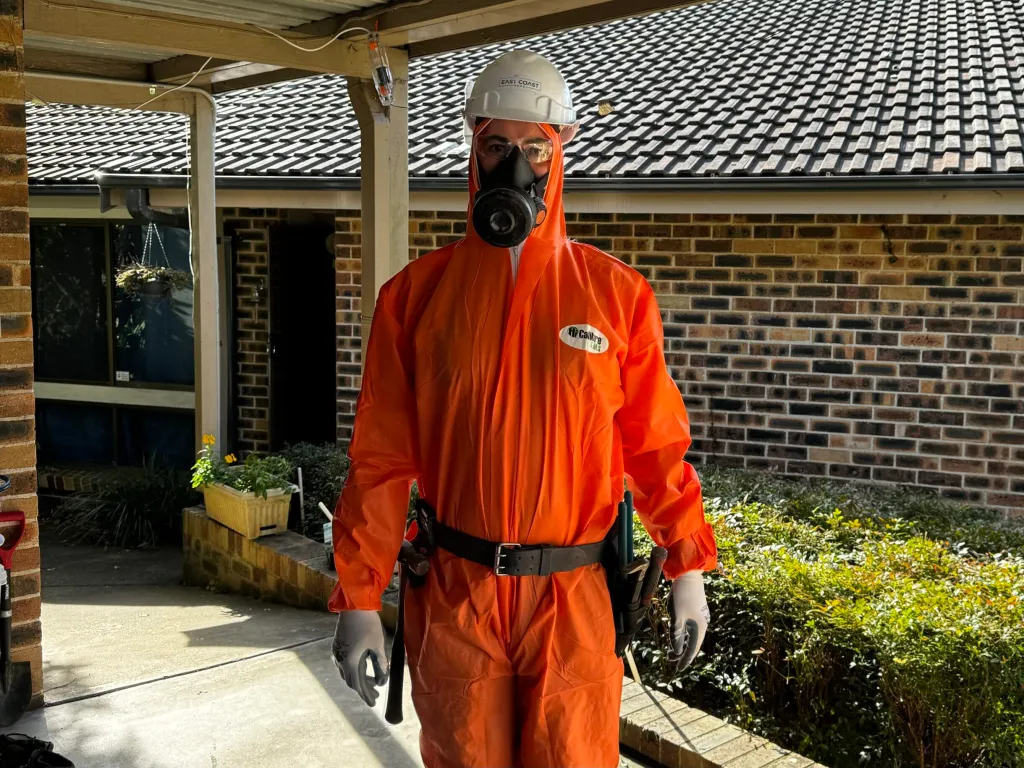
Professional asbestos testing Sydney removes uncertainty by combining a detailed site inspection with accredited laboratory analysis. When I arrive at a property, I walk through every accessible room, roof space, underfloor area and external structure, comparing the building materials with products commonly used across Sydney between the 1940s and late 1980s.
Once suspect materials have been identified, sampling follows a controlled process:
- Wear appropriate personal protective equipment
- Lightly dampen the material to limit fibre release
- Isolate the immediate work area
- Remove only a very small section and seal it in a labelled container
- Photograph and record the exact location, with chain of custody documentation
- Send the sample to a NATA accredited laboratory for analysis
The final report contains much more than a simple positive or negative result. It identifies the location of asbestos containing materials, describes their condition, assesses the likelihood of disturbance, and recommends whether the material should be removed, encapsulated or left in place until future work is planned.
For larger commercial buildings or sites heading towards complete demolition, I generally recommend a full asbestos audit rather than a basic inspection, since it provides a complete asbestos register for everyone working on site. If demolition involves removing internal walls, ceilings or commercial fit-outs before structural demolition, our guide to strip out demolition Sydney explains how proper planning helps avoid unnecessary delays.
A standard residential inspection usually takes only a few hours, while laboratory analysis generally takes one to three business days unless priority testing is requested. Taking an extra day for confirmed results is always better than discovering asbestos after demolition has begun.
After Asbestos Is Confirmed
Finding asbestos doesn’t mean your demolition project has to stop — it simply means the work must follow the correct sequence. Once testing confirms asbestos containing materials, the next step is deciding whether the material is friable or bonded, because that determines the licensing requirements and removal method:
- Friable asbestos (deteriorated pipe lagging, sprayed insulation) releases fibres very easily and must be removed by a Class A licensed contractor under strict containment conditions.
- Bonded asbestos (fibro wall sheets, roof sheeting) generally requires a Class B licensed contractor.
Before removal starts, the work area is isolated with barriers, warning signage and controlled access. Depending on the material, negative pressure units, specialised HEPA vacuum systems and continuous air monitoring may also be required. Every stage is documented, because SafeWork NSW regulations require licensed contractors to follow strict procedures that protect workers, neighbouring properties and the surrounding environment.
Once removal is complete, the work area undergoes a detailed clean before an independent clearance inspection. If everything meets the required standard, a clearance certificate is issued confirming the area is safe for demolition. I never recommend bringing demolition machinery onto a site before that certificate has been provided.
The Cost Of Skipping Testing
I’ve seen more than one renovation turn into a major remediation project because someone thought testing was an unnecessary expense. One property in the Inner West only needed a kitchen removed, yet hidden asbestos wall sheeting was broken apart during demolition, spreading contamination through adjoining rooms and into the roof space. Instead of finishing within a week, the owners faced specialist cleaning, licensed removal, air monitoring and extra laboratory testing before work could continue.
Financial consequences don’t stop with remediation costs. NSW work health and safety laws place clear responsibilities on both property owners and contractors to identify asbestos before demolition begins, and failing to meet those obligations can lead to significant penalties. Insurance companies may also refuse or reduce claims where mandatory asbestos identification procedures were ignored.
The health risks remain the biggest concern, because asbestos fibres cannot be seen once they’re released into the air. Without proper containment and respiratory protection, fibres can spread well beyond the original work area and expose workers, occupants and even neighbouring properties. Spending a little time on asbestos testing Sydney at the beginning protects your health, your budget and the overall success of the project.
Conclusion:
If your Sydney property was built before 1990, don’t assume previous renovations removed every asbestos product hidden behind walls, ceilings or flooring. Asbestos testing Sydney provides the certainty you need before demolition or renovation begins, helping you avoid delays, unnecessary costs and preventable health risks.
At East Coast Demo, we’ve helped Sydney property owners manage asbestos identification and demolition safely for years. Whether you’re planning a bathroom renovation, an interior strip out or complete house demolition, we’ll explain exactly what your property needs before work begins. Get in touch with the East Coast Demo team and let us help you move forward with confidence before the first wall comes down.
Frequently Asked Questions
How long does asbestos testing take before demolition can begin?
For most residential properties, the on-site inspection and sample collection can usually be completed within a few hours. Samples are then sent to a NATA accredited laboratory, with results typically available within one to three business days.
Is asbestos testing legally required before demolition in Sydney?
Yes. Under the NSW Work Health and Safety Regulation, asbestos must be identified before demolition or major renovation work starts on buildings where asbestos may be present — particularly properties built before 1990.
Where is asbestos most commonly found in older Sydney homes?
Commonly in fibro wall and ceiling sheeting, eave linings, soffits, corrugated roof sheets, vinyl floor tiles, pipe lagging and textured ceiling coatings. Homes built between the 1940s and the late 1980s are most likely to contain these materials.
Can homeowners collect asbestos samples themselves?
DIY sampling kits exist, but collecting samples yourself isn’t recommended, since disturbing suspect materials can release dangerous fibres into the air. A licensed asbestos assessor uses the correct PPE, controlled sampling methods and proper documentation to minimise risk.
What happens if asbestos is found during testing?
Bonded asbestos may require removal by a Class B licensed contractor, while friable asbestos must be removed by a Class A licensed contractor under strict safety controls. Once removal is complete and a clearance certificate issued, demolition can proceed safely.