

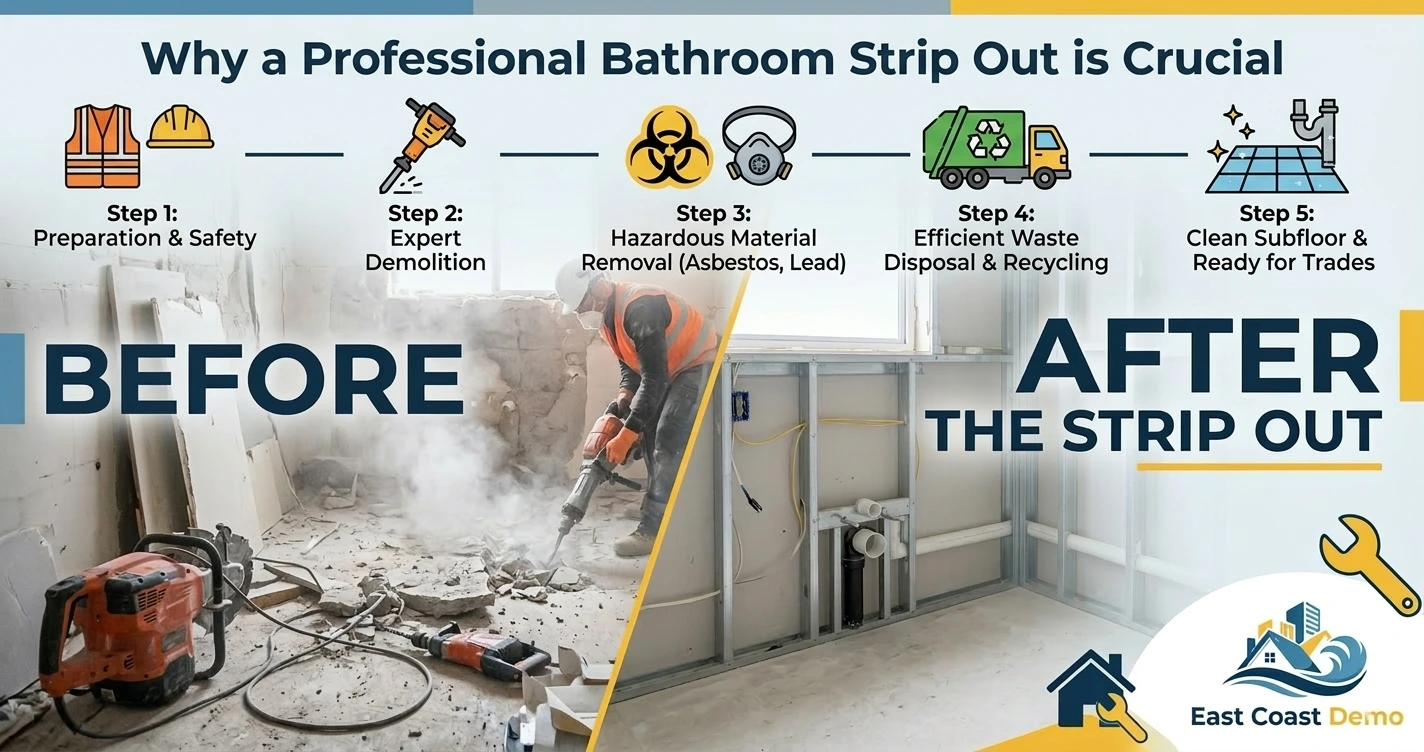
A bathroom renovation always looks exciting on Pinterest. Fresh tiles, neat fittings, clean lines, brushed tapware, and warm lighting. The dream is crisp. The reality usually starts with dust, broken tiles, hidden leaks, heavy rubble, and a room that suddenly looks like it lost an argument with a jackhammer.
That early stage is where everything either goes smoothly or starts going sideways. A proper Strip Out Services is not just about ripping things out and filling a skip. It sets the pace for the whole renovation.
In Sydney, where homes range from compact apartments to older Federation properties and modern townhouses, the removal phase needs planning, care, and a clear method. Without it, costs can escalate, timelines can swell, and surprises can multiply more quickly than the number of grout lines on a floor.
For property owners planning a renovation, the value of professional strip out work is often underestimated. Yet this stage has a direct effect on safety, waste removal, access, moisture control, compliance, and the quality of the build that follows. Clean demolition is not glamorous, but it is the backbone of a smart renovation.
What Really Happens During a Bathroom Strip Out
The first stage of a Bathroom Strip Out in Sydney always looks controlled rather than destructive. Water supply lines are isolated, electric feeding lights or fans are disconnected, and surrounding rooms are protected with plastic barriers. Experienced crews rarely begin with swinging tools. They start with inspection because bathrooms in Sydney houses often hide surprises from previous renovations.
Typically, the first thing to go is the old tiling. While they might pop right off in newer builds, older homes often feature tiles stuck with heavy-duty adhesives that feel more like solid cement than simple glue. Getting them up takes real patience and the right gear. This phase usually uncovers hidden issues like cracked bases, water damage, or old “quick-fix” repairs that were invisible from the outside.
Fixtures follow next. Toilets, vanities, showers, mirrors, and lighting all come out in sequence. Plumbing connections are capped, electrical cables are secured, and debris is cleared regularly rather than piling up. By the time the demolition reaches structural layers, the room already looks unrecognizable. A completed Bathroom Strip Out in Sydney leaves nothing but exposed framing, pipes, and flooring.
Old Sydney Bathrooms Hide More Than Expected
Anyone who works around renovation projects long enough begins to recognize patterns in older Sydney bathrooms. What appears to be a straightforward tile replacement often reveals deeper structural issues once demolition begins. It’s common to remove a vanity only to discover slow water leaks that have been quietly rotting cabinet bases for years.
You’ll often find surprises in the waterproofing, too. Plenty of bathrooms from decades ago used old-school systems that look nothing like the membranes we use today. During a Bathroom Strip Out, you’ll see these layers peel off in brittle flakes or just turn to dust. It’s usually the moment renovators realize the room was essentially living on borrowed time long before the tools came out.
Sometimes, even plumbing layouts cause concern. Older homes occasionally contain pipes rerouted during earlier renovations without documentation. A pipe may run diagonally through a wall cavity or share a space with electrical conduits. That unpredictability is exactly why experienced demolition teams treat each Bathroom Strip Out like an investigation rather than a simple teardown.
Benefits of Hiring Professional Strip Out Services
Hiring specialists offers several clear advantages.
Professional Sydney strip out specialists provide:
- Faster demolition timelines
- Reduced renovation delays
- Safe material removal
- Clean, ready-to-renovate spaces
- Proper waste disposal
Most importantly, a well-executed Bathroom Strip Out prevents structural damage that could increase renovation costs later.
Common Homeowner Mistakes Before Demolition Begins
A frequent slip-up for homeowners heading into a Bathroom Strip Out is underestimating the prep work needed for demolition. Most budgets tend to prioritize the shiny new fixtures over the teardown process. This often results in hasty decisions that prioritize speed over meticulous execution.
Another misstep involves assuming demolition is harmless if the intention is to rebuild everything anyway. Careless removal can actually cause damage to structural elements intended for replacement. Subfloors get gouged, plumbing pipes bend under impact, and surrounding plasterboard walls crack. These damages usually appear in renovation estimates after demolition has started.
A third mistake appears particularly often in apartments across Sydney. Some owners attempt partial demolition to save money, leaving sections of old tiles or waterproofing behind. Unfortunately, mixing new construction with compromised surfaces usually leads to failure later. A thorough Bathroom Strip Out often prevents far more expensive repair work down the line.
Cost Factors for Bathroom Strip Out in Sydney
The cost of a Bathroom Strip Out depends on several factors.
Common pricing variables include:
| Factor | Impact on Cost |
| Bathroom size | Larger spaces take longer |
| Tile thickness | Thick tiles require stronger equipment |
| Accessibility | Apartments require extra logistics |
| Waste removal volume | More debris increases disposal costs |
| Hazardous materials | Asbestos requires licensed removal |
Cost Variables That Shape Bathroom Demolition Budgets
Figuring out the cost of a Bathroom Strip Out is rarely just a matter of measuring square meters. Before a single tool is used on the site, numerous hidden variables significantly increase the cost of demolition, including specialized requirements for asbestos removal and disposal NSW.
Access is another huge factor; it changes labor time completely. A ground-floor home with an accessible driveway differs significantly from a high-rise unit with narrow hallways.
Material density also plays a surprisingly large role. Some older bathrooms contain tile layers stacked over thick mortar beds that resist removal. Demolition in those rooms requires heavier equipment and longer working hours. The extra labor doesn’t always appear obvious to homeowners until demolition begins.
Waste removal forms another major variable. Tiles, plasterboard, timber framing, and plumbing fixtures accumulate quickly during a Bathroom Strip Out. Disposal costs increase depending on material volume and building access. A bathroom that fits into a single skip bin may cost far less to clear than one requiring multiple waste collections.
Structural and Plumbing Risks During Bathroom Removal
Demolition inside bathrooms demands awareness of structural relationships within the building. Many walls contain load-bearing components or house plumbing systems shared with other rooms. Removing materials too aggressively during a Bathroom Strip Out can destabilize nearby structures or damage pipes running through cavities.
You have to be incredibly careful with the plumbing. Water lines sit just a few millimeters behind the tiles, and one wrong move with a demolition hammer can burst a pipe in a second. Addressing that issue typically involves further cutting into the wall or floor, which can significantly expand the project scope before work has even begun.
Drainage is another tricky area. Floor wastes and shower outlets have to stay perfectly aligned for the new setup. If the demo crew knocks these out of place, you’re looking at a plumber having to rebuild the whole network. Expert teams doing a Bathroom Strip Out will strip things back in careful layers to avoid these expensive blunders.
Waste Disposal and Environmental Compliance Issues
The rubble from a Bathroom Strip Out might look like junk, but Sydney’s disposal laws mean you can’t just dump it anywhere. You aren’t allowed to just take construction waste to a normal landfill without sorting it first. Things like metal, glass, and specific plastics usually have to be separated for proper recycling.
You also have to watch for hazards in older spots. It’s less common now, but bathrooms built a few decades back often used asbestos in the wall linings or glues. Messing with those materials without following the right safety steps is a massive health risk and a legal nightmare.
Professional demolition teams usually arrange licensed waste transport and follow disposal regulations. That seems like an administrative detail, but ignoring these requirements can delay projects significantly. Waste management remains one of the quieter yet critical responsibilities during a Bathroom Strip Out.
How Professionals Approach Demolition Planning
Experienced contractors rarely walk into demolition without a plan. A proper Bathroom Strip Out begins with reviewing plumbing layouts, electrical circuits, and structural drawings where available. Even a small bathroom benefits from a few minutes of planning before tools touch surfaces.
The order in which you tear things down matters more than you’d think. Pulling fixtures before tiles and shutting off services before hitting the walls keeps risks low. It might look slower than just smashing everything in sight, but a structured approach actually gets the job done faster in the end.
Planning also includes communication between trades. Plumbers and electricians sometimes inspect the room before demolition begins to identify potential challenges. Coordinating these inspections during a Bathroom Strip Out allows issues to be addressed early rather than discovered halfway through reconstruction.
The Bathroom Strip Out Phase Renovators Often Ignore
Most people talk about tiles and trends, but experienced builders know the Bathroom Strip Out phase is what really sets the tone. If the demolition uncovers rotted framing or failed waterproofing, your entire renovation plan may need to be redesigned.
It’s common for homeowners to push back on extra work found during the demo. Since the bathroom worked before, they don’t see the issue. The trick is helping them understand that building over a broken structure just hides the problem under a pretty new surface.
A careful Bathroom Strip Out sometimes extends renovation timelines slightly. However, ignoring what demolition reveals almost always costs more later. The best renovation outcomes often begin with accepting uncomfortable discoveries early in the process.
Practical Lessons From Real Renovation Sites
After working through multiple renovations, certain patterns begin repeating across projects. For example, bathrooms located above living spaces frequently contain hidden moisture damage that only appears during a Bathroom Strip Out. Water travels slowly through structural cavities, and small leaks can remain invisible for years.
You’ll often see old waterproofing that looks fine until the tiles come off. The second it hits the air, it cracks, showing just how fragile it really was. Anyone who tries to skip a full demo usually finds out about these failures a few months after the job is finished.
The actual site usually dictates the strategy. In tight Sydney terrace houses, you often can’t fit a skip bin or big gear. In those spots, a Bathroom Strip Out is a much slower, manual process. Crews have to adapt, carrying debris out in small loads instead of using machinery.
Conclusion
A great renovation always starts with solid prep. The bathroom strip-out stage clears out the old fixtures and tiles while highlighting any hidden pipes or structural drama. Beginning with a clean, expert-cleared space is the best way to avoid delays and keep the whole project safe.
If you’re planning a bathroom upgrade in Sydney, a professional bathroom renovation tear-out can set the right foundation for your project. Skilled strip-out specialists handle demolition carefully while protecting plumbing and structures. Contact us today to get a quote and start your renovation with confidence.
Frequently Asked Questions
1. What is included in a Bathroom Strip Out service in Sydney?
A standard Bathroom Strip Out usually involves stripping the tiles, vanities, tubs, toilets, and floors. Pros will also unhook the plumbing, scrape away old waterproofing, and haul off the trash. You’re left with a completely blank canvas ready for the next stage.
2. How long does bathroom demolition take in Sydney?
Most Sydney bathroom demolition projects take one to two days, depending on the size of the space. Larger bathrooms or complex layouts may require additional time. Professional Sydney strip out specialists usually complete demolition quickly while protecting surrounding structures and plumbing systems.
3. Is bathroom demolition safe for apartment buildings?
Absolutely. Professional Sydney experts use specialized, controlled methods built specifically for apartment environments. This bathroom renovation tear-out Sydney approach keeps your neighbours on side by sticking to low-vibration tools, high-quality dust screens, and a meticulous strategy for getting waste out of the building.
4. Why hire professionals for a Bathroom Strip Out?
Hiring a pro Bathroom Strip Out service is the best way to avoid the nightmare of burst pipes, electrical hazards, or structural mishaps. Expert teams take care of the debris and all the safety compliance, so your builders can start the installation the second the teardown wraps up.
5. How much does bathroom demolition cost in Sydney?
What you’ll pay for bathroom demolition in Sydney depends on the size of the room, how hard it is to access, and the materials involved. Small bathrooms are usually less expensive, but bigger projects or high-rise apartments cost more because of extra labour and dumping fees.
6. What happens after the Bathroom Strip Out is complete?
Once the bathroom renovation tear-out Sydney is finished, the space is officially a blank canvas. This is when builders can check the plumbing, lay down fresh waterproofing, swap out the electrics, and start fitting the new tiles, showers, and vanities for your updated layout.