

A building comes down in hours, yet the real work often starts afterward. Mountains of broken concrete, timber, metal, bricks, plasterboard, and mixed materials remain across the site. Proper demolition waste removal prevents leaving a site choked with smashed concrete and tangled rebar, which completely gridlocks your workflow, turning the footprint into an absolute safety minefield that is impossible to grade for your upcoming slab pour.
Right across Sydney, ruthless council green mandates and EPA tracking laws dictate exactly how structural debris must be logged and handled. Because the compliance stakes are so high, sorting your load fractions has evolved into a fundamental make-or-break phase of your civil program. Modern site clearing centers are entirely on high-recovery processing, eco-smart resource recovery, and zero-compromise chain of custody transit.
No matter if your machine operators are leveling a suburban brick veneer house, a commercial office layout, an industrial warehouse depot, or a high-street shopfront, running a tight blueprint for demolition waste removal locks in your building certificates and keeps the workspace perfectly clear for the subbies.
On top of that, running high-recovery sort loops slams the brakes on astronomical tip fees while supercharging your project’s green credentials. Getting a solid grip on the material workflow post-knockdown with demolition waste removal is the absolute ultimate trick for helping developers make data-backed moves and dodge catastrophic scheduling bottlenecks during the rebuild phase.
What Happens Immediately After Demolition?
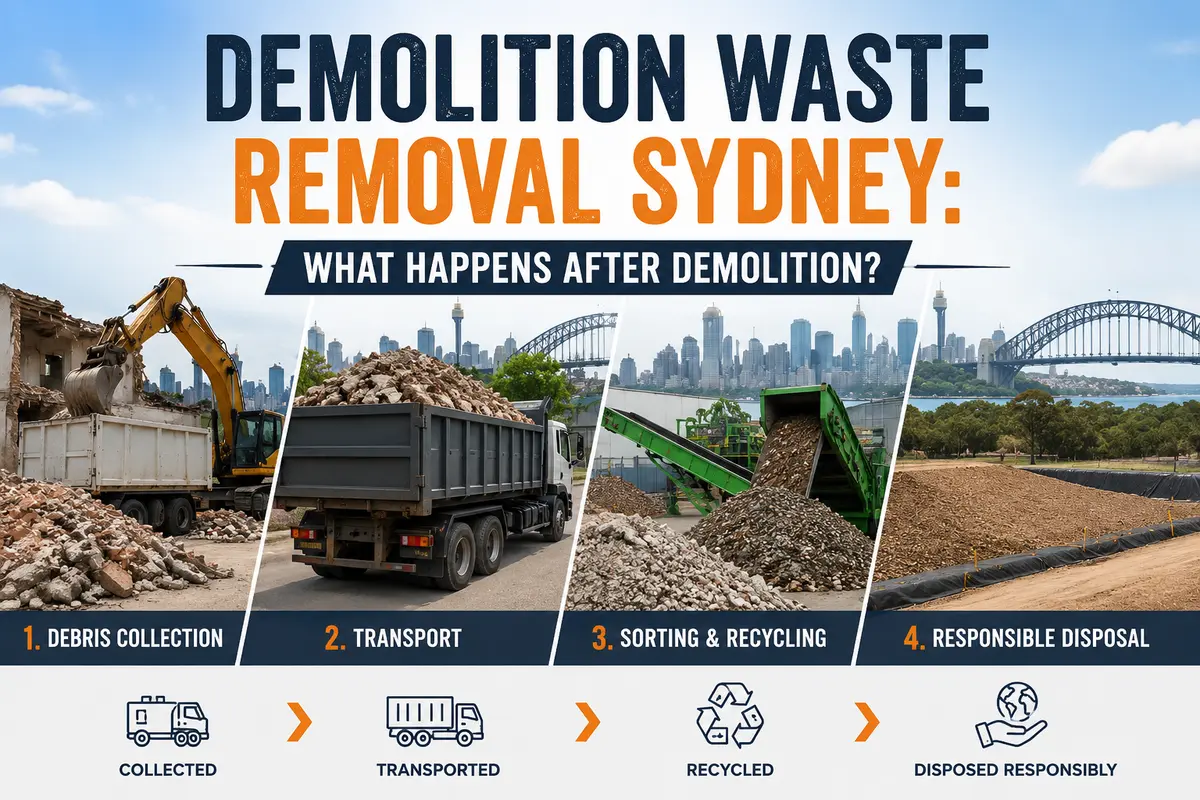
The exact second the primary high-reach excavators track away from the rubble pile, the site managers pivot 100% into full ground recovery. Heavy pieces of structural aggregate, masonry brick, seasoned timber rafters, tin roof sheets, and structural steel beams get systematically compiled and segregated into clear waste streams, laying down the absolute foundation for a high-output demolition waste removal workflow.
High-tonnage loaders and log grapples push into the footprint first to muck out the oversized structural wreckage for efficient demolition waste removal. The microsecond the heavy iron clears a path, the ground crews jump onto tools to sort the remaining pile into itemized drop zones.
Ferrous iron, masonry rubble, structural hardwoods, green organic overgrowth, and general site rubbish get routed down separate channels, keeping your tip weights lean, maximizing your resource recovery margins, and supporting effective demolition waste removal.
Executing high-yield demolition waste removal sydney wide relies on maintaining an incredibly strict, rhythmic trade workflow on the dirt. Separating your aggregate and timbers on site is the single best shortcut to avoiding painful mixed-waste penalties at the weighbridge while checking off your corporate environmental targets. Plus, keeping a clean, structured perimeter stops dust drifts and tumbling hazards from breaching your boundary fences and angering the neighbors.
While the buckets are cycling, our site foreman will run deep sub-surface audits to search for invisible liabilities trapped below the dirt line. Collapsed legacy clay pipes, forgotten underground footings, and buried builder rubbish frequently demand targeted extraction work long before the screw-piling rigs can roll onto the pad.
The Importance of Sorting and Recycling Materials
Top-tier demolition waste removal takes a hell of a lot more strategy than just mindlessly throwing rubble into a fleet of bogie tippers. Running an aggressive circular economy setup is how modern civil outfits crush their carbon index targets and breathe new life into valuable structural commodities.
A surprising volume of structural wreckage can be re-machined into pristine aggregate and materials. Hard concrete cores get fed into mobile impact crushers to turn out clean road-base and aggregate, while structural scrap iron is loaded straight into smelter loops for manufacturing. Even old structural hardwood beams can be remilled for custom architectural frames or mulched for wide-scale landscaping builds.
The table below highlights common materials and their potential outcomes.
| Material | Recycling Potential | Common Reuse |
| Concrete | High | Road base and aggregates |
| Steel | High | Manufacturing products |
| Timber | Moderate | Landscaping and building materials |
| Bricks | High | Reclaimed construction materials |
| Green Waste | High | Mulch and compost |
Demolition waste recycling Sydney services continue expanding because sustainability remains a priority across the construction sector, making demolition waste removal more efficient. Consequently, more waste is avoided from landfill and returned to productive use.
Tier-one developers are heavily choosing civil teams that specialize in high-yield demolition waste removal and demolition waste recycling Sydney options. Playing smart offense with your resource recovery checks your corporate social responsibility boxes perfectly while keeping your overall weight slips lightyears friendlier on your project budget.
How Building Waste Is Transported and Disposed Of
The second the skips hit capacity, the sorted materials are immediately hauled out to specialized masonry recyclers, heavy transfer depots, and licensed EPA landfills. Coordinating the heavy truck transit demands millimetric planning from the logistics desk, given the staggering tonnage of dead weight a full site tear-out generates every shift.
Building waste disposal Sydney operations depend on the type and quantity of debris, making demolition waste removal an essential part of the workflow. Some materials travel directly to recycling centres, while others require processing before final disposal to streamline demolition waste removal.
Nailing your transport logistics is also vital for locking down public safety along our local streets. Directing the drivers to lock down heavy-duty PVC tarps prevents sharp tile fragments or dust sheets from launching out of the bins onto the highway, while fully ticketed operator hands stay strictly inside local transport mandates, ensuring demolition waste removal is efficient and compliant.
On high-density urban footprints, your supervisor must orchestrate tight truck arrivals to prevent structural gridlock at the gates, ensuring bins cycle out of the address at lightning speed so the concrete trucks can back in weeks ahead of schedule.
While these site clearances are active, plenty of savvy project managers contract out the complete works to professional demolition services sydney based to handle all upcoming structural drop and clearance tasks under a single banner. Getting an all-in-one trade package locked down upfront smooths out your construction milestones and optimizes your baseline workforce output.
Site Cleanup After Demolition: More Than Removing Rubbish
Executing a pristine site cleanup after demolition goes a hell of a lot deeper than just hand-picking a few loose bits of brick out of the dirt. A professional, level-one handover strips the site clean down to the absolute millimeter, prepping the ground for smooth piling rough-ins, drainage trenches, or civil paving.
Several tasks commonly occur during this phase:
- Removal of remaining debris and loose materials.
- Surface levelling and grading.
- Dust and contamination control.
- Final waste inspections.
- Preparation for future site activities.
Leaving even a few hidden chunks of steel or buried timber fragments under the soil will break an auger tooth or rot out under your new paving later. That is exactly why our remediation crews maintain a zero-compromise focus on the dirt, ensuring you walk away with a perfectly clear, load-bearing pad ready for the builders.
Partnering with elite teams for your demolition rubbish removal sydney wide hooks your site up with specialized screening buckets and magnetic sweeps engineered to trap fine wire shards and glass sheets that standard backhoes would roll straight over.
The end result is that your street address achieves an immaculate tier of building readiness long before the surveyors pitch their first stakes.
Residential and Commercial Waste Removal Differences
While the underlying civil physics don’t change, executing a domestic residential demolition waste removal run and organizing a major industrial commercial demolition waste removal scheme are two completely different beasts when it comes to volume and site logistics.
Standard residential blocks drop a relatively modest volume of structural waste, mostly turning up pine framing timber, tile battens, concrete bricks, and domestic internal linings.
On the flip side, jumping into commercial demolition waste removal loads your trucks with hundreds of tons of heavy tilt-up concrete panels, heavy-gauge structural steel columns, commercial glass facades, and dangerous composite architectural cladding. Managing a high-volume commercial asset zone requires complex multi-truck logistics and rolling traffic control permits.
The following comparison illustrates key differences:
| Factor | Residential Projects | Commercial Projects |
| Waste Volume | Moderate | High |
| Equipment Required | Standard | Heavy-duty |
| Project Duration | Shorter | Longer |
| Logistics Complexity | Lower | Higher |
| Recycling Opportunities | Moderate | Extensive |
As modern architectural developments push for maximum spatial density across our suburbs, locking down your waste logistics early becomes an absolute mandatory rule. Running a highly efficient demolition waste removal system keeps your crane operators and brickies working at absolute peak speed with zero layout delays.
Managing Concrete, Hazardous Materials, and Special Waste
You can never just treat a pile of industrial structural rubble as a single, uniform heap of trash, because highly specific material classes demand dedicated tracking and distinct drop zones.
High-mass aggregate usually makes up the absolute lion’s share of your total site debris weight, which is exactly why major civil builders retain certified concrete removal sydney specialists to break down, load out, and crush down those massive foundation footings without stalling the main site timeline.
Tracking toxic building materials demands an even higher level of millimetric safety tracking. Brittle legacy buildings put your workforce at risk of exposing deadly hidden contaminants that require strict EPA-wrapped tracking sheets, which explains why our managers work hand-in-hand with licensed asbestos removal Sydney squads to seal and clear the footprint before a single tipper truck starts rolling.
To add to that, any timber or soil flagged with chemical tracking or oil spills is legally blocked from passing through standard masonry recycling plants. Running an airtight screening process right at the boundary gate is how you protect your site compliance, combining strict environmental duty of care with national building codes to secure a perfectly safe workspace for your trades, neighboring boundaries, and future tenants.
Why Professional Demolition Waste Removal Matters
Trying to clear out heavy demolition debris using a few basic tandem trailers is a fast track to massive council fines, severe site injuries, and blown-out construction budgets. Booking an expert demolition debris removal Sydney setup guarantees that every single ton of material moves through the exact legal EPA weighbridges from the first bucket scoop straight down to the final tip receipt.
Certified crews turn up with a deep, mechanical understanding of material sorting filters, heavy vehicle transport limits, waste disposal classifications, and strict WorkCover safety codes. Plus, having high-output sorting attachments on site lets your operators chew through mountains of structural steel and masonry in a fraction of the time.
A well-managed project delivers several benefits:
- Faster site turnaround.
- Reduced landfill contributions.
- Improved safety outcomes.
- Better regulatory compliance.
- Enhanced sustainability performance.
With our local departments placing massive pressure on low-impact, sustainable building completions, throwing your budget into a high-end waste tracking partner stands as a high-return asset upgrade for any serious developer or private landlord in the market.
Conclusion
Flattening an old building might wrap up one chapter of the land, but it unrolls the perfect runway for a fresh real estate opportunity. Staying on top of your demolition waste removal routines turns a chaotic, jagged pile of wreckage into a pristine, laser-leveled, and completely build-ready footprint for your carpenters.
Committing to professional sorting, advanced demolition waste recycling Sydney workflows, tight scheduling, and compliant tipping transforms a logistical nightmare into a beautifully clean, eco-sustainable operational triumph.
Whether you are mapping out a domestic demolition debris removal Sydney run or steering a massive multi-million-dollar industrial redevelopment footprint, locking down a tight waste program is how you secure a zero-accident site and elite environmental marks.
Deploying advanced demolition waste recycling Sydney systems ensures we keep thousands of tons of structural aggregate from filling up local landfills while recovering top-tier building commodities straight back into the trade loop.
For reliable site preparation, efficient waste handling, and professional project support, contact a trusted demolition specialist today. Request a free demolition quote in Sydney and move the next project forward with confidence.
Frequently Asked Questions
What Happens to Demolition Waste After a Building Is Demolished?
After demolition, all debris is carefully sorted and removed from the site. Materials such as concrete, bricks, timber, metal, and green waste are separated for recycling or disposal. Professional demolition waste removal in Sydney ensures waste is handled safely, efficiently, and in accordance with local environmental regulations.
How Is Demolition Waste Recycled in Sydney?
Many demolition materials can be recycled rather than sent to landfill. Concrete can be crushed for reuse in construction projects, while metals, bricks, and timber are often processed and repurposed. Demolition waste recycling in Sydney helps reduce environmental impact and supports sustainable building practices.
Why Is Professional Demolition Waste Removal Important?
Professional demolition waste removal ensures debris is collected, transported, and disposed of correctly. Experienced contractors follow safety standards, use appropriate equipment, and manage waste responsibly. This reduces hazards on-site and helps property owners meet legal and environmental requirements.
What Is Included in Site Cleanup After Demolition?
Site cleanup after demolition involves removing all remaining debris, waste materials, and potential hazards from the property. The area is then cleared and prepared for future construction, landscaping, or redevelopment. A thorough cleanup creates a safe and ready-to-use site for the next stage of the project.
Can Residential and Commercial Demolition Waste Be Handled Differently?
Yes, residential demolition waste removal often involves materials from houses, garages, and small structures, while commercial demolition waste removal may include larger volumes of concrete, steel, and specialised materials. Each project requires a tailored waste management approach to ensure efficient removal and disposal.
How Can Demolition Waste Removal Help Reduce Landfill Waste?
Effective demolition debris removal prioritises recycling and material recovery whenever possible. By diverting reusable materials away from landfill, demolition contractors help conserve natural resources and reduce waste generation. This approach supports environmentally responsible building and demolition practices across Sydney.