

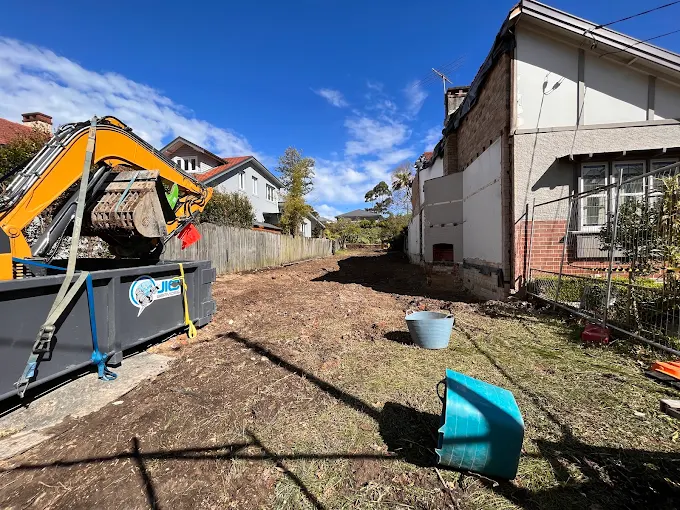
One of the most common questions I get asked before a job starts is what actually happens to all the material after the structure comes down. It is a fair question and one that a lot of Sydney homeowners and commercial property managers have not thought through until they are standing in front of a pile of broken concrete, twisted steel, and splintered timber wondering how it gets from their site to somewhere else. Rubbish removal demolition Sydney is a bigger part of every job than most people realise, and understanding it before work starts helps you budget accurately and avoid the unexpected costs that catch people off guard when the final invoice arrives.
Rubbish removal demolition Sydney covers how demolition waste is classified and sorted under NSW EPA regulations, what typically gets recycled versus what goes to landfill, what the legal requirements are for waste disposal on Sydney demolition sites, and how waste removal is costed so you are not surprised by variables that appear after work has already begun. Whether you are planning a full house demolition in Penrith, a commercial strip out in Surry Hills, or a partial demolition in Parramatta — rubbish removal demolition Sydney is a significant component of every job and it is worth understanding properly before you sign any contract.
How Demolition Waste Is Classified in NSW
Not all demolition waste is the same and it does not all get disposed of the same way. The NSW EPA classifies construction and demolition waste into several distinct categories that determine how each material type must be handled, transported, and disposed of — and getting this wrong carries genuine legal and financial consequences for both the demolition contractor and the property owner who engaged them. Understanding these classifications is the first step toward managing rubbish removal demolition Sydney projects correctly from the start.
General solid waste covers the bulk of material from most residential demolitions in Sydney — broken concrete, brick rubble, timber framing, plasterboard, roof tiles, and mixed construction debris from the structure itself. This material can be transported to a licensed construction and demolition waste facility for processing and sorting. A significant proportion of general solid waste from a well-managed rubbish removal demolition Sydney project is recyclable — concrete gets crushed and reused as road base and fill aggregate, clean separated timber goes to wood chipping operations, and clean bricks from older Sydney properties can be cleaned and resold through architectural salvage channels or crushed for drainage aggregate. The recycling rate on a properly sequenced residential demolition in Sydney can reach 70 to 80 percent of total material volume, which reduces landfill gate fees and in some cases generates small material credits depending on market demand.
Hazardous waste is the category that changes the cost and complexity of rubbish removal demolition Sydney contractors must plan for on any older Sydney property. Asbestos-containing materials are by far the most common hazardous waste category encountered on Sydney demolition sites, particularly in residential and commercial properties built before 1990. Asbestos waste must be double-bagged in heavy poly bags, clearly labelled with hazardous waste identification, and transported exclusively by a licensed asbestos removalist in a fully covered vehicle to a licensed hazardous waste disposal facility. It cannot be mixed with general demolition debris under any circumstances, cannot be transported in an open skip bin, and cannot be taken to a general construction waste facility. Getting this classification wrong on a rubbish removal demolition Sydney project exposes both the demolition contractor and the property owner to significant penalties under NSW Work Health and Safety legislation.
What Gets Recycled and What Goes to Landfill
The volume of material that can be diverted from landfill on a rubbish removal demolition Sydney project depends heavily on how the demolition itself is conducted. A site that is carefully stripped out before any mechanical demolition begins — removing fixtures, cabinetry, windows, doors, and roofing materials separately before the structure is mechanically demolished — generates a significantly higher proportion of recyclable and reusable material than a site demolished in a single mechanical pass with all debris mixed together.
Concrete is one of the highest-volume materials in residential demolition work and it is almost entirely recyclable when kept separated from other waste streams. Crushed concrete aggregate is used extensively across Sydney’s road base, drainage layer, and civil fill applications. Our concrete removal process is specifically built around keeping concrete materials clean and separated from the demolition debris stream so they can be directed to recycling facilities rather than landfill. Reinforcing steel recovered from concrete slabs and footings is sorted separately and sold as scrap metal, often generating a small return that partially offsets the total rubbish removal demolition Sydney disposal cost.
Timber framing from pre-1960 Sydney homes can carry genuine salvage value if the structure is deconstructed carefully rather than demolished mechanically. Old-growth hardwood from Victorian-era terrace homes in suburbs like Balmain, Glebe, and Paddington — particularly tongue-and-groove flooring, wide-profile window frames, and structural hardwood beams — commands a meaningful premium in Sydney’s architectural salvage market. Strip out demolition Sydney work that prioritises careful manual deconstruction over mechanical speed generates material credits that meaningfully reduce the overall cost of rubbish removal demolition Sydney projects on older inner Sydney properties.
Plasterboard, roof tiles, glass, contaminated timber, and mixed debris that cannot be effectively sorted once combined together generally ends up in landfill after processing at a licensed construction waste facility. The cost of landfill disposal in Sydney has increased significantly over the past decade, with the NSW government’s waste levy adding a substantial fixed component to every licensed disposal facility’s gate fee. This levy cost appears in every legitimate rubbish removal demolition Sydney quote and should be understood as a genuine unavoidable expense before comparing contractors.
Legal Requirements for Rubbish Removal Demolition Sydney
Sydney demolition contractors are legally required to comply with the NSW Protection of the Environment Operations Act when managing and disposing of all demolition waste on Sydney sites. Every load of construction and demolition waste generated during rubbish removal demolition Sydney work must be directed to a licensed waste facility — not to a vacant block, not to a council kerbside area, and not to a recycling depot that is not licensed to accept construction waste. Skip bins used during rubbish removal demolition Sydney projects must be covered during road transport. Hazardous materials including asbestos must be managed under a separate documented hazardous waste management plan, transported by licensed contractors, and disposed of at licensed hazardous waste facilities with a documented chain of custody from site to final disposal.
Property owners carry a genuine legal responsibility to ensure that the contractors they engage are managing rubbish removal demolition Sydney legally and in compliance with these requirements. If a demolition contractor dumps material illegally — on vacant land, in a bush reserve, or at an unlicensed tip site — the property owner can face liability under NSW environmental legislation even if they had no direct knowledge of or involvement in the illegal disposal. This is not a theoretical or rare risk. Sydney councils and the NSW EPA actively investigate illegal dumping complaints and track waste material back to source sites through waste facility manifests, contractor registration records, and site surveillance footage. Working with a licensed contractor who provides documented rubbish removal demolition Sydney waste disposal manifests protects you entirely from this exposure.
How Rubbish Removal Demolition Sydney Is Costed
Rubbish removal demolition Sydney is costed based on the volume and weight of material generated, the material types present and their respective disposal requirements, and the gate fees at the licensed facilities used for disposal. Most demolition contractors include rubbish removal demolition Sydney as a component of an all-inclusive project price rather than as a separate itemised cost, but understanding what drives the waste removal cost helps you evaluate competing quotes accurately.
| Waste Type | Disposal Method | Typical Cost Driver |
| General concrete and rubble | Licensed C&D recycling facility | Volume and weight — levy applies |
| Clean timber framing | Wood chipping or salvage | May generate credit if clean |
| Mixed demolition debris | Licensed C&D waste facility | Volume, weight, and levy |
| Asbestos — non-friable bonded | Licensed hazardous facility | Weight plus licensed removal cost |
| Asbestos — friable | Licensed Class A hazardous facility | Highest disposal cost category |
| Scrap steel and reinforcing | Scrap metal recycler | Usually credit or zero cost |
The biggest variable in rubbish removal demolition Sydney project budgets is the discovery of hazardous materials that were not identified before the quote was prepared. If asbestos-containing materials are found during a strip out that were not visible during the initial site inspection — inside wall cavities, under floor tiles, or behind ceiling linings — the cost of managing and disposing of those materials is a legitimate variation to the original rubbish removal demolition Sydney project quote. The most effective way to prevent this variation is a pre-demolition asbestos assessment, which identifies all asbestos-containing materials before any work begins and allows the full hazardous waste management cost to be included in the original rubbish removal demolition Sydney quote rather than appearing as a mid-project surprise.
Why Proper Waste Management Matters for Sydney Property Owners
Beyond legal compliance, the way rubbish removal demolition Sydney is managed directly affects the timeline of the whole project, the condition of the site handed back at completion, and the environmental outcomes of the demolition work. A demolition contractor who manages rubbish removal demolition Sydney poorly — allowing debris to accumulate across the site, mixing material streams that should be separated, or using an open skip that generates dust and noise complaints from neighbouring properties — creates delays and complications that affect the entire project schedule.
Responsible selective demolition Sydney work considers rubbish removal demolition Sydney sequencing as part of the project plan from the first day, not as a cleanup task at the end. Planning where skip bin positions will be, what materials will be segregated for recycling, how concrete and heavy rubble will be stockpiled for pickup, and how hazardous materials will be contained and removed before general demolition begins — all of these decisions affect both the efficiency and the legal compliance of rubbish removal demolition Sydney on every site.
For commercial property owners managing defit services Sydney or office strip outs, rubbish removal demolition Sydney documentation is often a specific requirement of the building’s facilities management team. A demolition contractor who cannot provide waste disposal manifests and environmental compliance documentation at project completion creates a compliance gap that can hold up building handover and create disputes with building management.
Conclusion
Rubbish removal demolition Sydney projects generate is not an afterthought — it is a significant and legally regulated component of every demolition project that directly affects cost, timeline, compliance, and environmental outcomes. Understanding how rubbish removal demolition Sydney waste is classified in NSW, what gets recycled versus what goes to landfill, what the legal obligations are for both contractors and property owners, and how rubbish removal demolition Sydney costs are structured puts you in a significantly stronger position when evaluating demolition quotes and managing a project from planning through to site handover.
If you are planning a demolition in Sydney and want to understand exactly how rubbish removal demolition Sydney will be managed on your site, what documentation you will receive at project completion, and how East Coast Demo prices waste removal transparently from the start, get in touch with our team today. We handle complete site clearances across greater Sydney, provide full waste disposal manifests after every rubbish removal demolition Sydney project, and give you honest all-inclusive pricing so there are no surprises when the job is done.
FAQs
Who is legally responsible for rubbish removal demolition Sydney — the contractor or the property owner?
In practical terms the demolition contractor manages all rubbish removal demolition Sydney as part of the project scope, but the legal responsibility for ensuring waste is disposed of correctly and legally sits with both parties under NSW environmental legislation. Professional demolition contractors include complete rubbish removal demolition Sydney in their quoted price and provide waste disposal documentation confirming licensed facility disposal after the job is complete. Always confirm rubbish removal demolition Sydney is explicitly included in your contract scope and request waste disposal manifests at project completion.
Can I keep specific materials from my demolished Sydney property?
Yes, in most cases property owners can request that specific materials be set aside before or during the demolition sequence — old hardwood flooring, heritage doors, windows, or roofing materials that have architectural salvage value. This needs to be discussed with your demolition contractor before work begins so the rubbish removal demolition Sydney sequencing can be adjusted to recover those items safely without compromising project efficiency or site safety. Materials salvaged by the property owner are excluded from the contractor’s rubbish removal demolition Sydney scope and costing.
What is the NSW waste levy and why does it appear in demolition quotes?
The NSW waste levy is a government-imposed fee charged per tonne of waste delivered to licensed disposal facilities in the Sydney metropolitan area. This levy is a substantial and fixed component of the total disposal cost on every rubbish removal demolition Sydney project, and it applies to all general construction and demolition waste regardless of whether the material is ultimately recycled or sent to landfill at the processing facility. It is a legitimate and unavoidable cost that appears in every compliant rubbish removal demolition Sydney quote. Quotes that do not appear to include waste disposal or levy costs should be examined very carefully before acceptance.
How long does rubbish removal take after a standard Sydney house demolition?
For a standard single-storey Sydney residential demolition, the structural demolition and rubbish removal demolition Sydney occur simultaneously over two to four days as debris is generated and loaded into skip bins or directly into tipper trucks. A complete site clearance to a clean, level, ready-to-build condition typically requires one to two additional days after the structural demolition is complete. Properties with significant concrete slabs, in-ground swimming pools, or large retaining wall structures require additional rubbish removal demolition Sydney time. Your contractor should provide a clear timeline as a documented component of the project schedule.
Does asbestos always cost extra on rubbish removal demolition Sydney projects?
Yes, asbestos-containing materials always incur costs above the general rubbish removal demolition Sydney allowance because they require licensed removal, specialised double-bagging and labelling, dedicated licensed transport, and disposal at a hazardous waste facility. The extent of the additional cost depends on the quantity of asbestos present and its classification as friable or non-friable. A pre-demolition asbestos assessment conducted before work begins identifies all asbestos-containing materials and allows the full management cost to be included in the original rubbish removal demolition Sydney quote rather than emerging as a variation after work has already started.